
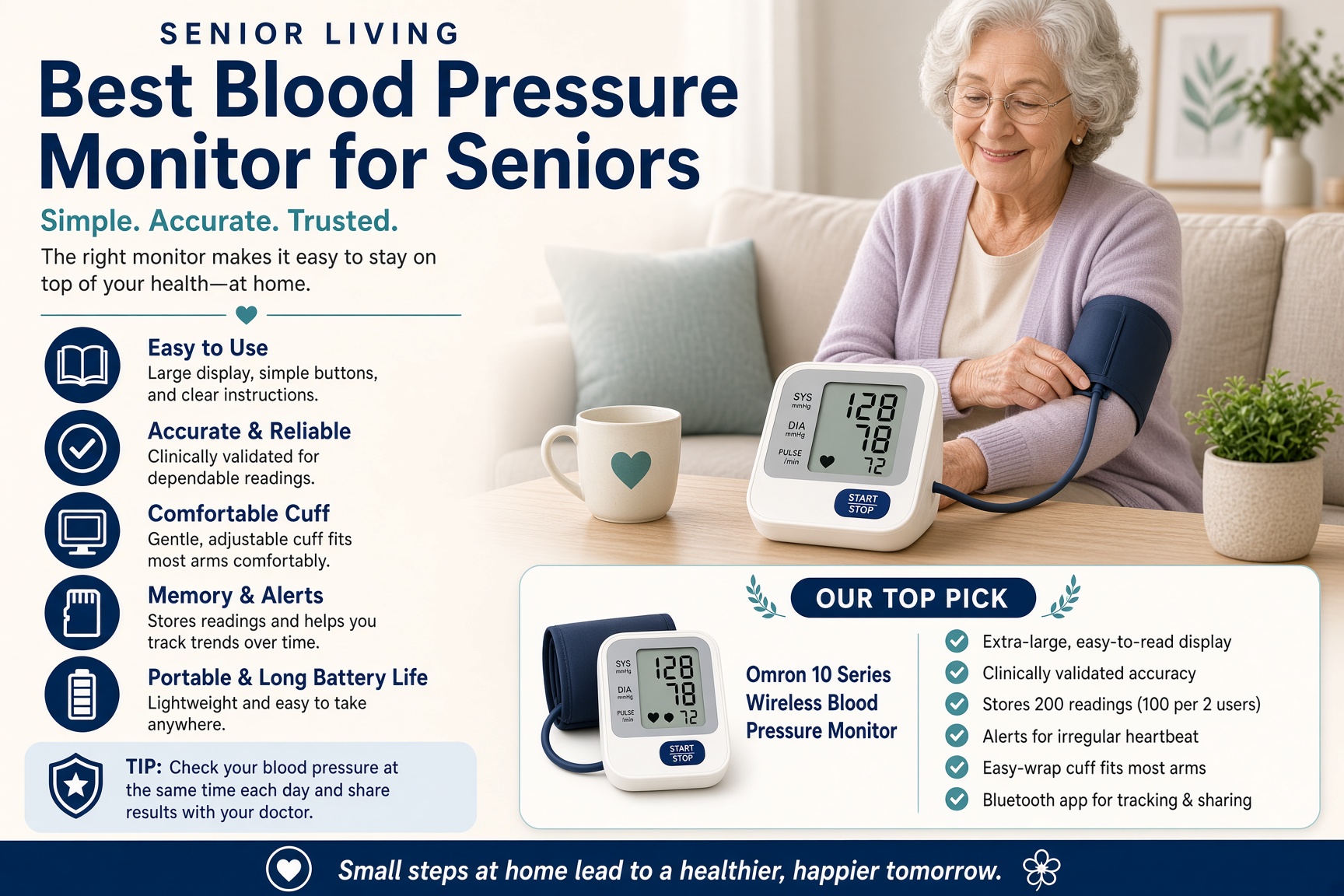
When it comes to picking a blood pressure monitor for seniors, fancy tech gimmicks take a back seat to what actually matters: clinical accuracy, an easy-to-read screen, and a cuff that doesn’t require a degree in origami to wrap around your arm.
Upper-arm monitors remain the gold standard for accuracy. To save you from digging through hundreds of medical supply pages, here are the top-rated blood pressure monitors tailored specifically for older adults.
At a Glance: Top Blood Pressure Monitors
| Monitor | Best For | Key Senior Feature | Price Range |
| Omron Platinum / 10 Series | Best Overall | Dual backlit screen, pre-formed cuff, AFib screening | High |
| Oxiline Pressure XS Pro | Best Visual Display | Color-coded WHO risk bar, movement detection | High |
| Omron 3 Series | Best Budget & Simple | One-touch button, large uncluttered numbers | Low |
| A&D Medical Talking BP Monitor | Best for Low Vision | Audio voice broadcast of results | Medium |
| Withings BPM Connect | Best for Caregivers | Seamless Wi-Fi sync to app for off-site family/doctors | High |
We earn a commission if you make a purchase at no extra cost to you.
1. Omron Silver Upper Arm Monitor
Best Overall
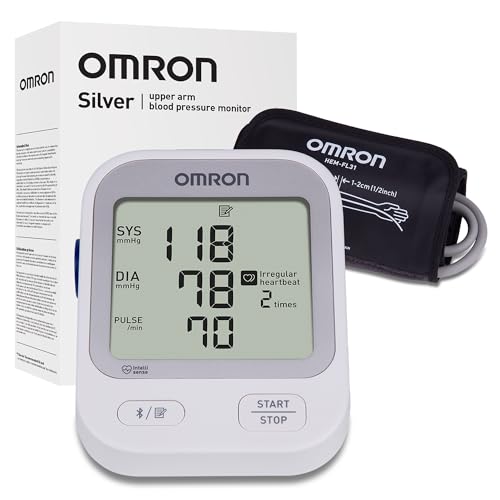
If you want doctor-trusted accuracy paired with maximum legibility, Omron is the reigning champion.
Features a high-contrast, dual-display screen that lets you compare your current reading against past averages side-by-side.
Standout Feature: Built-in irregular heartbeat screening. It alerts you if an irregular heart rhythm is detected.
2. Oxiline Pressure XS Pro
Best for Visual Clarity
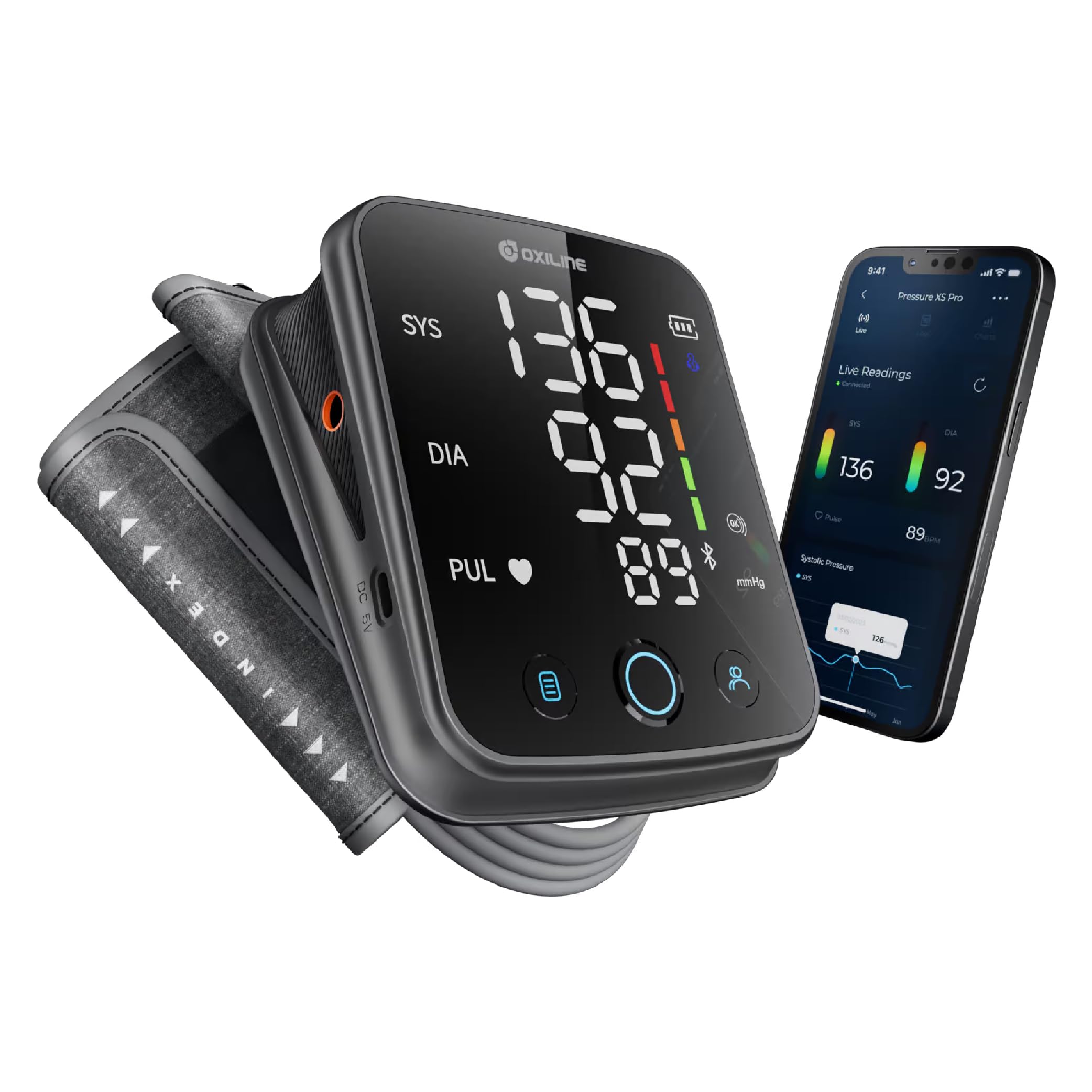
Oxiline’s XS Pro is built specifically for ease of reading and mistake-proofing.
Standout Feature: VIBRA™ sensor tech flags body movement warnings. If you accidentally shift or talk during a test, it alerts you so you know to retake it.
Why seniors love it: The extra-large display includes a built-in color-coded risk bar (green/yellow/red) based on World Health Organization standards. You immediately know if a reading is elevated without having to memorize blood pressure charts.
3. Omron 3 Series
Best No-Frills Budget Pick
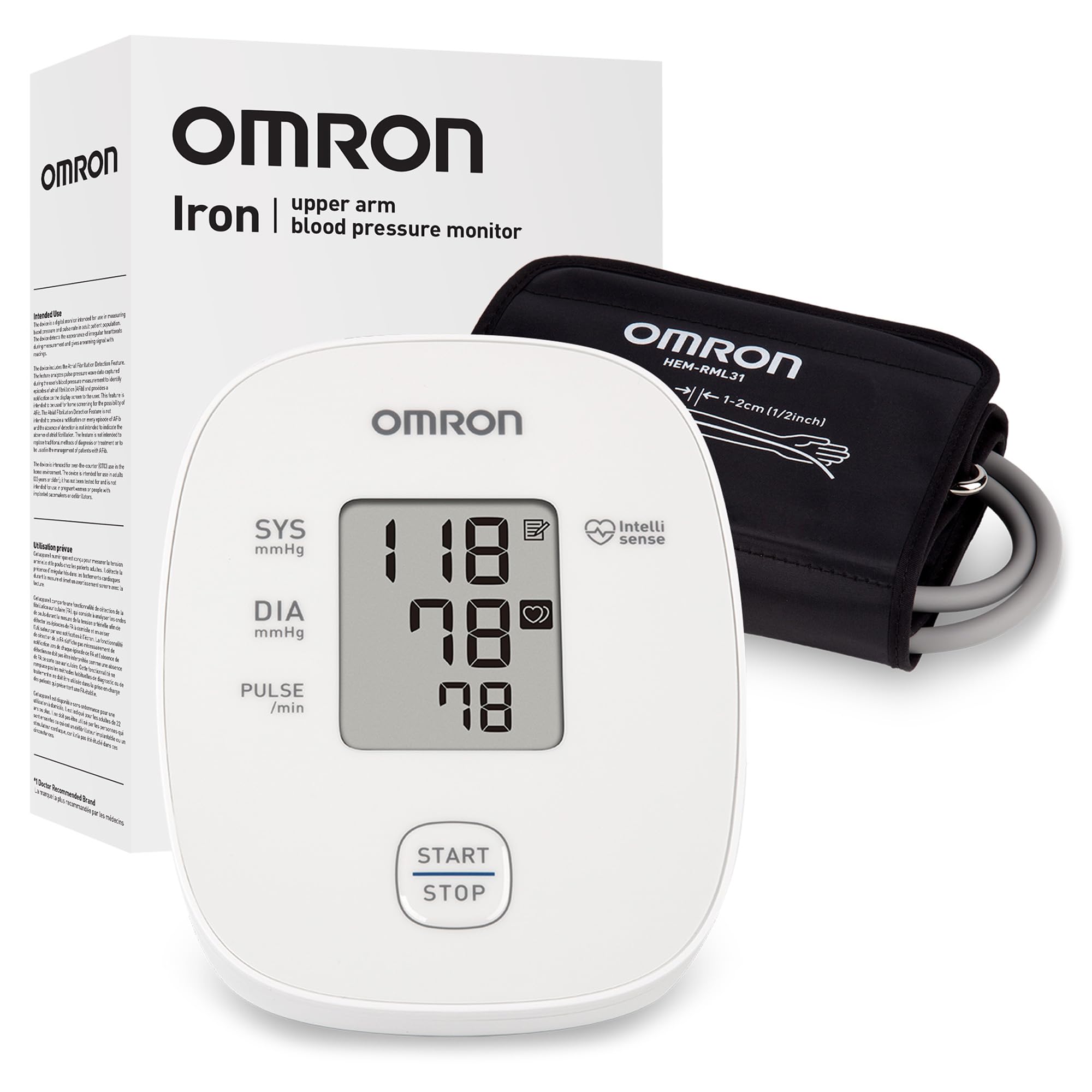
Not interested in Bluetooth apps, subscriptions, or ten buttons on the device? The Omron 3 Series strips away the fluff.
Standout Feature: Highly accurate, clinically validated readings for around $40–$50. It does one job and does it reliably.
Why seniors love it: Pure simplicity. Put on the cuff, press the giant START button, and read the giant numbers.
4. A&D Medical UA-1030T
Best for Vision Impairments

For anyone dealing with cataracts, macular degeneration, or general vision fatigue, reading small digital screens can be frustrating.
Standout Feature: High-contrast backlit display combined with full verbal guidance and irregular heartbeat detection.
Why seniors love it: It speaks! The device announces instructions and reads back your systolic, diastolic, and pulse results in a clear voice (available in English, Spanish, or French).
5. Withings BPM Connect
Best for Remote Family Sharing

For seniors whose children or remote doctors like to keep tabs on health trends from afar.
Why seniors love it: You don’t need a phone present during the measurement. Once set up, pushing the button takes the reading, displays it on the built-in LED screen, and sends the data over home Wi-Fi straight to a smartphone app.
Pros of these senior-friendly monitors
- Upper-arm cuffs are generally easier to use correctly than wrist models
- Large numbers, one-button start, and talking options make readings easier to see and understand
- Several models store past readings, which helps you and your doctor spot changes
- A pre-formed or wide-range cuff is easier to put on with one hand
- Family members can follow along when a model syncs to an app
Cons to keep in mind
- App-connected models take more setup the first time
- Talking and “smart” features cost more than a basic one-button monitor
- A cuff that is too small or too large can give a poor reading
- Wrist monitors may look handy, but they are easier to use wrong
- No home monitor replaces your doctor’s advice
Who should buy which one
- Want the most useful all-around home monitor? Start with the Omron Platinum / 10 Series.
- Want the simplest option and a lower price? Get the Omron 3 Series.
- Have trouble seeing the screen? Use the A&D Medical talking monitor.
- Need a family member to see the readings from another house? Look at the Withings BPM Connect.
- Want a color-coded screen that is easy to glance at? Consider the Oxiline Pressure XS Pro.
My recommendation
If I were buying one today for myself or another person my age, I would get a simple upper-arm Omron. The 3 Series is enough if you just want a clear reading. Step up to the Platinum model if you want a better screen and extra alerts.
Take two or three readings, sitting quietly, and write them down for your doctor. That matters more than owning the fanciest machine.
Quick Buyer’s Checklist for Seniors
Important Pro-Tip: Always verify that a monitor is validated for clinical accuracy (listed on sites like ValidateBP.org).
- Upper Arm over Wrist: Wrist monitors are extremely sensitive to body positioning; if your arm isn’t held precisely at heart level, readings can skew high. Bicep cuffs are much more forgiving.
- Measure the Arm First: standard cuffs fit arms 9 to 17 inches. If the senior has thinner or larger arms, check cuff dimensions before buying—an improperly fitting cuff is the #1 cause of inaccurate readings.
- One-Touch Operation: Look for devices with a single central activation button to avoid accidental menu navigation.
Leave a Reply