
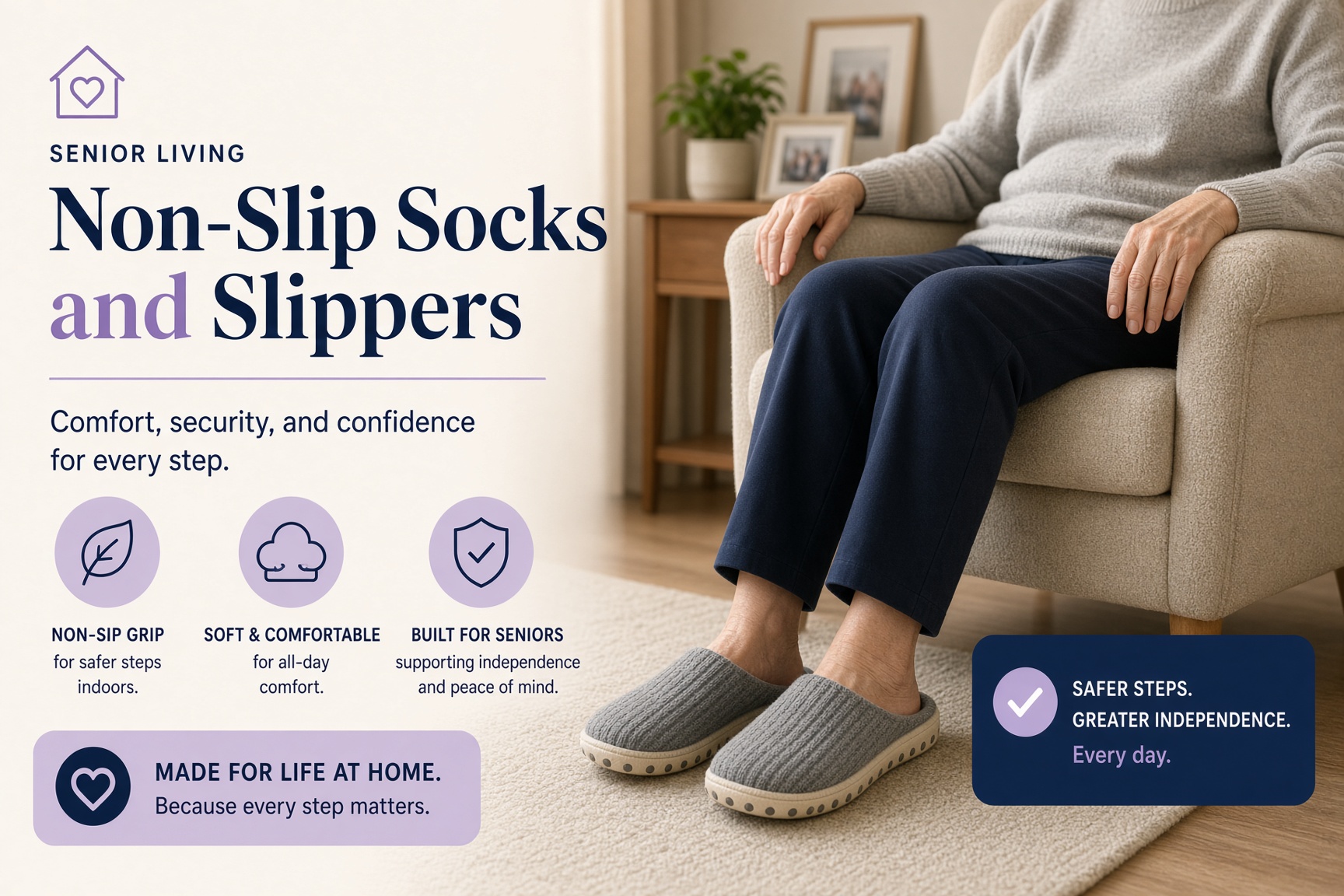
Most falls at home happen on slick floors in socks or floppy slippers. Bare feet can slip too. The goal is simple: something on your feet that grips and stays on.
Two common options:
- Gripper socks: rubber dots or treads on the bottom
- House slippers: a real sole, preferably with a closed heel
Gripper socks are better than plain socks. A closed-heel slipper with a rubber sole is usually safer than socks if you walk much around the house.
At a Glance
| Product | Type | Best For | Price range |
|---|---|---|---|
| ZAKASA or similar grip socks (multi-pack) | Gripper socks | Everyday indoor walking | Low |
| Pembrook or Vive hospital-style grip socks | Gripper socks | Night trips, hard floors | Medium |
| CaiDieNu / diabetic non-binding grip socks | Gripper socks | Swollen feet or tight cuffs | Medium |
| Closed-back memory foam slippers | Slippers | All-day indoor wear | High |
| Wide adjustable slippers | Slippers | Swelling, easy on and off | High |
We earn a commission if you make a purchase at no extra cost to you.
1. Multi-pack grip socks
Best cheap first step

Look for treads that cover most of the sole, not three lonely dots. A 4- or 6-pack means you can wash a pair and still have clean ones. Throw out pairs when the rubber is worn smooth.
2. Hospital-style grip socks
Best for night walking

These are the socks hospitals use for a reason. The tread is usually denser. Good for tile, wood, and the path to the bathroom. They will not replace a motion light or a clear hallway.
3. Non-binding diabetic grip socks
Best for swollen feet

A tight cuff can leave marks and is hard to pull on. Non-binding tops slide on easier and are kinder if you have swelling or circulation concerns. Still check with your doctor if you have diabetes or numb feet.
4. Closed-back memory foam slippers
Best if you live in slippers

Women’s

Men’s
Open-back slides come off and trip people. A closed heel keeps the slipper on when you walk. Look for a rubber sole, not a slick fabric bottom. Memory foam feels good; the sole is what keeps you upright.
5. Wide adjustable slippers
Best when feet change through the day

Men’s

Women’s
Hook-and-loop straps help if your feet swell by evening. Extra width helps bunions. Make sure the heel still cups the foot. A strap that is only on top will not save a floppy heel.
- Plain socks on hardwood or tile: switch to gripper socks today
- You walk a lot indoors: get closed-heel slippers with a rubber sole
- Night-only trips: gripper socks by the bed are fine
- Swollen feet: non-binding socks or adjustable slippers
- Numb feet or diabetes: have someone check fit. Tight seams and wrinkles can cause sores
- Outdoor errands: these are not walking shoes. Use a proper shoe outside
Pros
- Gripper socks cost little and work immediately
- Multi-packs stay in rotation through laundry
- Closed-heel slippers stay on better than slides
- Wide or adjustable styles help swelling
- Easy to keep a pair by the bed
Cons
- Worn-out dots become as slick as regular socks
- Fuzzy socks without a real sole can still slide
- Open-back slippers come off mid-step
- Socks do not support the foot the way a shoe does
- Nothing on your feet fixes a loose rug or a dark hallway
My recommendation
If you only buy one thing, get a multi-pack of gripper socks and put a pair by the bed tonight.
If you spend the day in slippers, skip the slide-on kind. Buy closed-back slippers with a rubber sole.
Use gripper socks for short indoor trips. Use slippers or indoor shoes if you are on your feet more. Replace them when the grip is gone.
This is general home-safety information, not medical advice.
Leave a Reply