

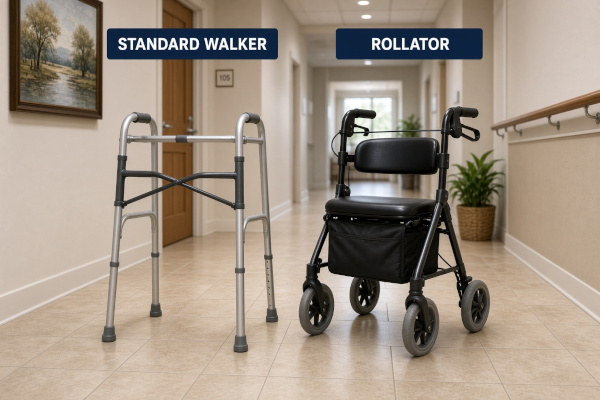
A walker holds you up. A rollator helps you keep going. That’s the whole difference, and picking the wrong one can make walking harder, not easier.
A walker is a metal frame you lift or slide with each step. It gives the most support. A rollator has three or four wheels, hand brakes, and usually a seat. It rolls with you, so it’s faster and easier to push. But it can also roll away from you.
If you’re not sure which one you need, ask your doctor or a physical therapist. They can watch you walk and tell you in five minutes. Here’s what they’ll be looking for.
At a Glance
| Type | Best for | Support | Seat? | Price range |
|---|---|---|---|---|
| Standard walker (no wheels) | Poor balance, or after surgery | Most | No | Low |
| Two-wheel walker | Needs support but lifting a walker is tiring | High | No | Low |
| 3-wheel rollator | Tight spaces, steady walkers | Medium | No (most) | Medium |
| 4-wheel rollator | Longer walks, needs rest breaks | Medium | Yes | Medium |
| Upright rollator | Wants to stand tall, not hunch over | Medium | Yes | High |
Some links on this page are affiliate links. If you buy through them, I may earn a small commission at no extra cost to you.
Drive Medical 2-Button Standard Foldable Walker for Seniors
Best for the most support

You lift it, set it down, and step into it. It’s slow, but it won’t roll away. This is what most people get after a hip or knee surgery. Look for one that folds flat and has height buttons you can press easily.
Drive Medical Two-Button Folding Walker with Wheels, Height Adjustable
Best middle ground
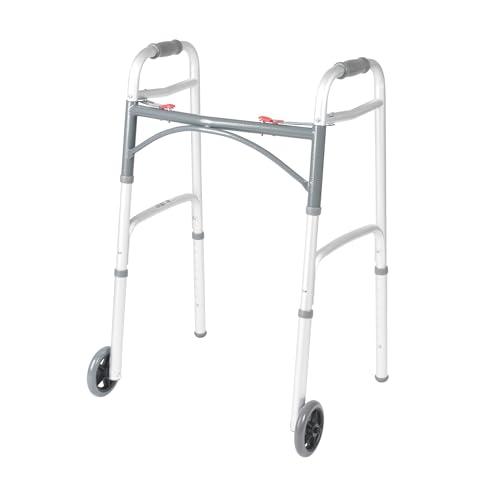
Wheels in front, rubber feet or glides in back. You push it instead of lifting it, but the back legs keep it from rolling too fast. A good choice if a standard walker wears out your arms.
Vive Mobility 3 Wheel Walker for Seniors
Best for small homes
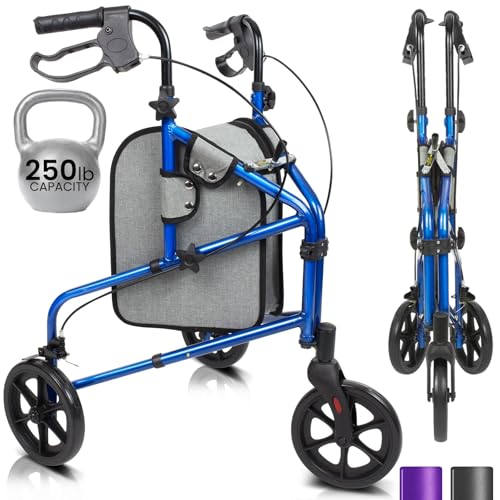
Lighter and easier to turn than a 4-wheel rollator. Good for narrow hallways and store aisles. Most don’t have a seat, and they tip more easily on a sharp turn. Only for people who already walk fairly steady.
VOCIC Z21 Rollator Walker for Seniors with Seat
Best for getting out of the house

This is the one you see at the grocery store. Hand brakes, a seat, and usually a basket. Great if you can walk but need to sit and rest along the way. Bigger wheels (8 inches or more) roll better on sidewalks and grass.
Helavo Upright Walker with Seat
Best if you hunch over a regular walker

You rest your forearms on padded supports and stand up straight. Some people find it easier on the back and shoulders. It costs more and is bulkier to fold. Try one in a store first if you can.
How to choose
- You feel unsteady or might fall: standard walker or two-wheel walker
- You walk fine but get tired: 4-wheel rollator with a seat
- Small home, narrow halls: 3-wheel rollator, or a two-wheel walker
- You lean hard on it with each step: a walker, not a rollator. A rollator can roll out from under you.
- You hunch over when you walk: try an upright rollator
- You’ll lift it into a car a lot: check the weight before you buy
Get the height right
This matters more than the brand. Stand up straight with your arms hanging down at your sides. The handles should line up with the crease of your wrist. When you hold them, your elbows should bend just a little.
Too low and you’ll hunch. Too high and your shoulders will ache.
Safety tips
- Lock the brakes every time before you sit on a rollator.
- A rollator is not a wheelchair. Never let someone push you while you’re sitting on it.
- Test the brakes before each trip. Brake cables stretch over time.
- Check the weight limit. It’s printed on the frame or in the manual.
- Replace worn rubber tips and glides on a walker. Worn tips slip.
Will Medicare pay for it?
Medicare Part B may help pay for a walker or rollator when your doctor says you need one. You’ll usually need a prescription, and you must buy from a supplier that takes Medicare. Call your plan before you buy, not after.
Pros
- Walkers give the most support you can get from a frame
- Rollators let you walk farther and rest when you need to
- Both fold for the car
- Basic models don’t cost much
Cons
- A walker is slow and tiring on long walks
- A rollator can roll away if you lean too hard on it
- Cheap rollators can have weak brakes and wobbly seats
- The wrong height can cause back and shoulder pain
My recommendation
If you’re unsteady, start with a walker. Safety first, speed later.
If you can walk but run out of steam, get a 4-wheel rollator with a seat and good brakes. Don’t buy the cheapest one. Weak brakes and a wobbly seat are the last things you want.
Whatever you choose, set the height right on day one. Then take a few slow laps around the kitchen before you head outside.
Related reviews: Best Cane for Seniors · Walking Shoes for Seniors · Non-Slip Socks and Slippers
This is general information, not medical advice. Talk with your doctor or physical therapist about what’s right for you.
Leave a Reply